Panels
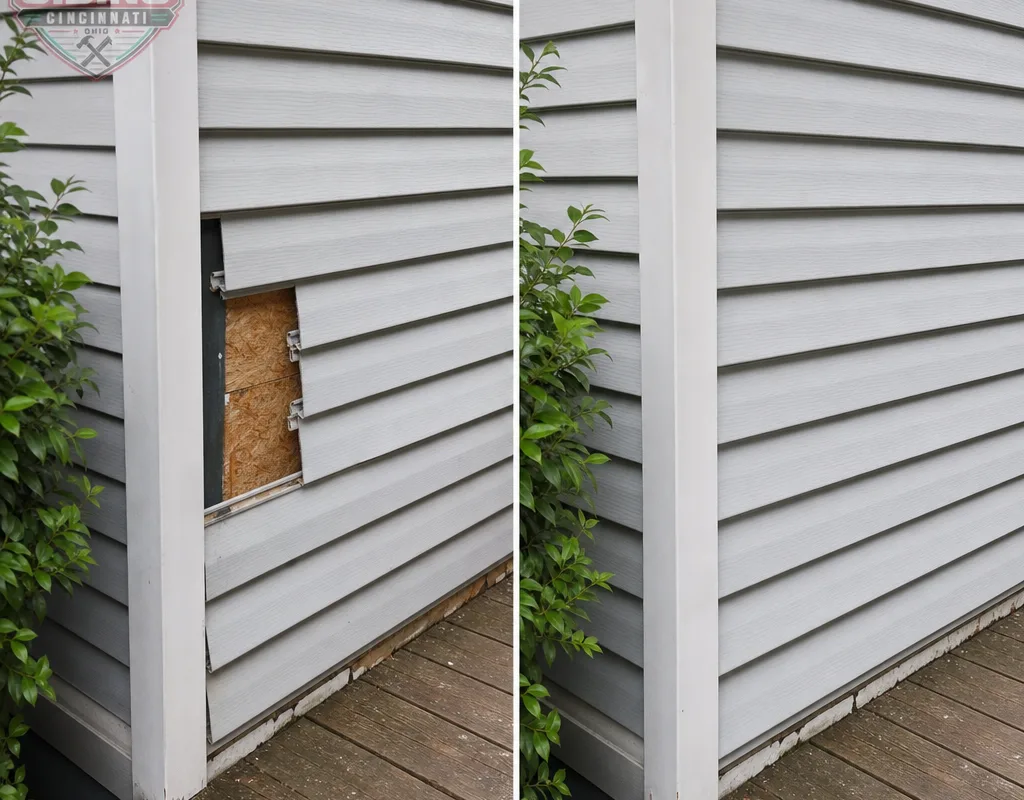
Loose, missing, or warped panels
Local contractors can rehang and secure vinyl or fiber cement sections, replace damaged pieces, and restore proper spacing so panels can expand and contract without buckling.
Siding repair · Cincinnati, Ohio
When wind, hail, moisture, or age opens up your exterior, small problems turn into bigger ones fast. Siding Cincinnati repairs damaged sections, fixes loose panels, and restores a tight weather barrier so your home looks right and stays protected.
Repair the failure, not just the surface
If you are searching for siding repair Cincinnati Ohio homeowners rely on, you are usually dealing with something specific: a panel that blew off, corner trim that popped loose, a cracked board, a hole from impact, or a seam that is letting water behind the siding.
A lasting repair restores the siding system as a system, not just the appearance of one spot. That means matching the profile as closely as possible, re-securing panels correctly, reworking trim and flashing where needed, and sealing only where sealant belongs. Overcaulking the wrong joint can trap water and create bigger issues later.
Cincinnati weather can be hard on exteriors. Big temperature swings, wind-driven rain, and freeze-thaw cycles tend to find weak points around corners, window and door trim, and any place fasteners or J-channel have loosened. A good repair focuses on those failure points so the fix lasts.
Local siding contractors in Cincinnati can explain what failed, what will change, and what to expect after the repair.
Targeted exterior repairs
Panels
Local contractors can rehang and secure vinyl or fiber cement sections, replace damaged pieces, and restore proper spacing so panels can expand and contract without buckling.
Impact
From lawn equipment hits to storm debris, the affected area and surrounding courses should be checked for hidden damage and loosened lock seams.
Trim
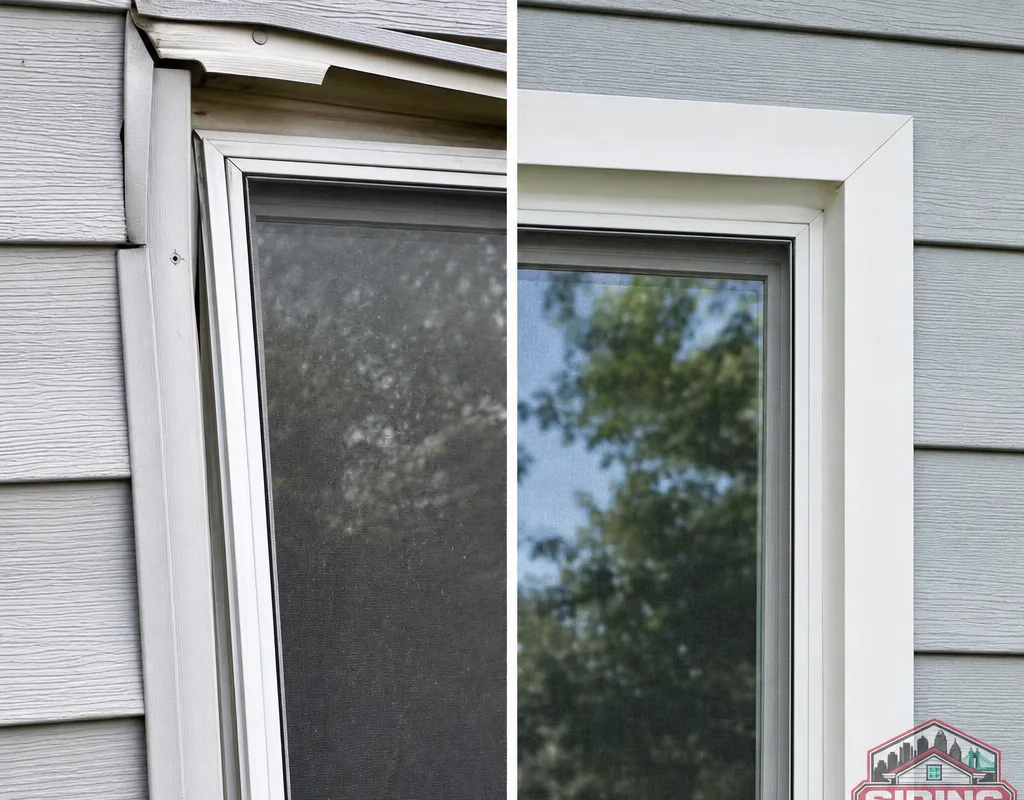
Corners and channels are where siding systems often fail first. Components should be reset, fasteners corrected, and edges supported and aligned.
Moisture
Entry points around windows, doors, hose bibs, vents, and light fixtures should be identified and detailed so water sheds properly.
Substrate
If sheathing or trim is compromised behind the siding, the contractor should identify it clearly and address what is required for a sound repair before closing the wall.
Inspection-led repair planning
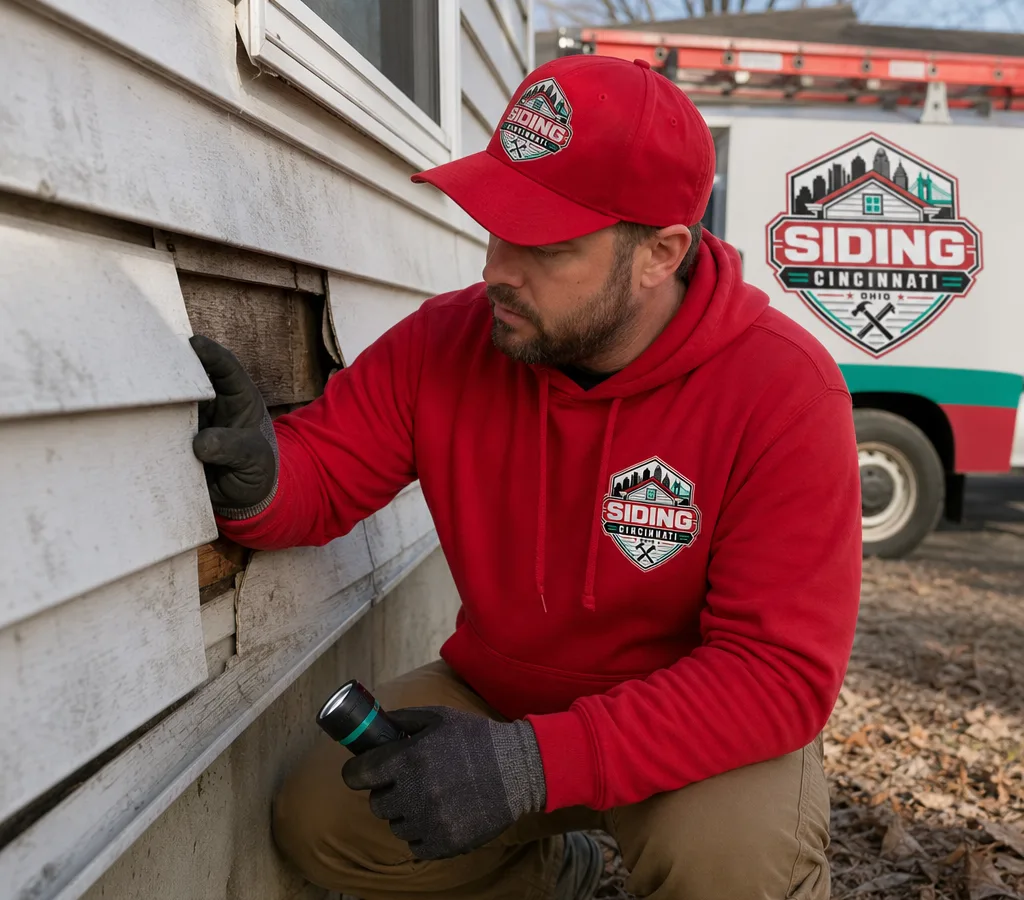
A lasting Cincinnati siding repair starts with a short, practical inspection rather than guesswork.
Water movement is reviewed. Siding is a rain-shedding layer, not a waterproof wall. If water is getting behind it, the fix often involves correcting how a piece laps, how trim is terminated, or how flashing works at an opening.
Attachment is checked. Loose panels are commonly caused by nails driven too tight, missing fasteners, improper placement, or wind stressing an already weak lock. Panels should be reattached so they can move normally with temperature changes.
Profile and color are matched as closely as possible. Even within vinyl, there are different profiles and exposures. If exact matches are unavailable, the contractor should explain realistic options before installation.
Neighborhood conditions matter. In areas like Hyde Park and Mount Lookout, homes often have lots of architectural trim details and prominent elevations, so clean lines and careful transitions matter. In Westwood and Price Hill, many homes sit on hillsides where wind can hit corners and gable ends harder, so fastening and corner details matter even more. Around Oakley, where housing styles and renovation histories vary block to block, contractors often encounter mixed materials and older add-ons that need extra attention at tie-ins.
Assessment to cleanup
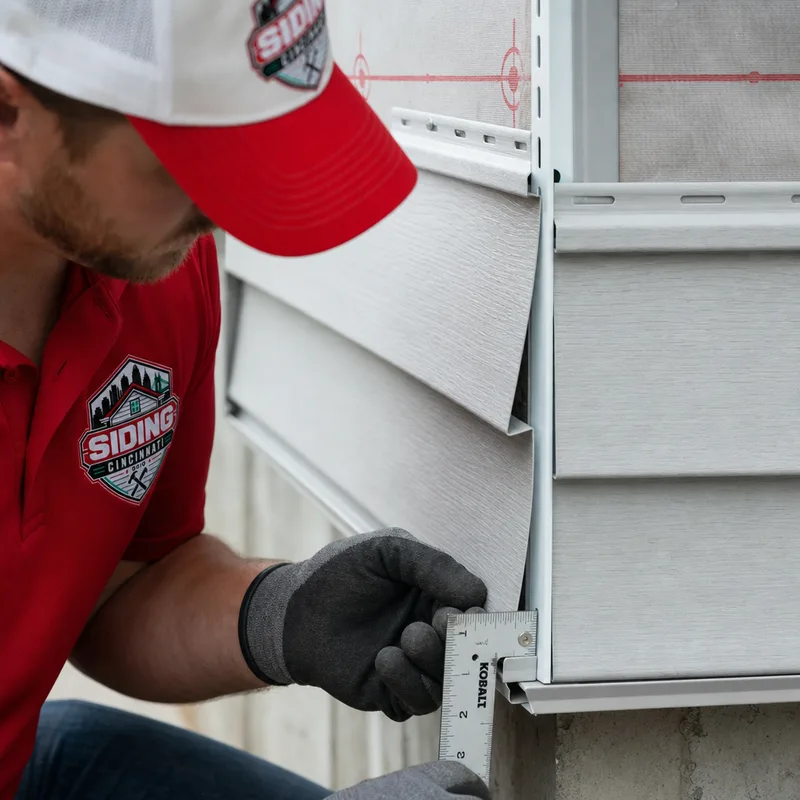
The contractor identifies what failed—impact, wind, moisture, installation issue, or material fatigue—and checks adjacent areas that commonly loosen or leak.
The contractor confirms siding type, profile, and trim pieces, then outlines exactly what will be repaired or replaced.
Only necessary materials are removed before accessible underlying issues are corrected and sections are reinstalled or replaced with proper fastening and detailing.
The contractor verifies alignment, lock engagement, and finished appearance, then leaves the work area clean and identifies other visible at-risk spots.
Repair pricing
Siding repair in Cincinnati typically runs about $250 to $1,200 for small to mid-sized fixes, with larger repairs or multiple elevations often landing in the $1,200 to $3,500+ range. A simple reattachment of loose panels is usually on the lower end, while replacing sections, trim components, or addressing moisture damage behind the siding costs more.
Your price depends on siding type and availability, how high or steep the work area is, how much has to be removed to reach the problem, and whether any underlying sheathing or trim needs repair. The exact cost is confirmed after an on-site assessment of the damaged area.
Homeowner questions
Many siding repairs can be scheduled quickly once the material and scope are confirmed, but timing depends on access, weather, and sourcing replacement pieces. Urgent issues such as missing panels or openings exposed to wind-driven rain should be closed promptly, with follow-up detailing completed as conditions allow.
The affected area can usually be repaired when the surrounding siding remains sound and the underlying issue is localized. The contractor should check how the damaged section ties into corners, trim, and adjacent courses so the repair locks in properly.
Yes. Local contractors handle common residential siding materials with the attachment, alignment, and water-shedding details appropriate to each type. Some older colors or discontinued profiles can be hard to source, so matching options should be explained before work proceeds.
Corners and openings are high-stress areas where wind can catch edges and where small installation errors show up first. In Cincinnati siding repair work, contractors often find fasteners driven too tight, pieces cut short, or trim channels that have shifted, which can let a panel unlock or create a path for water during heavy rain.
If the problem area is accessible without expanding the scope too far, a contractor can often correct the entry point and address minor underlying damage. Broader moisture issues should be documented with recommended next steps before opening more of the wall.
The goal is always a close match, but exact matching depends on the existing siding profile, age, and sun fade. The contractor should set expectations early and explain practical alternatives when an exact match is unavailable like replacing a larger, more natural break area so the finish looks intentional.
Protect the open area
Send a few details about what you are seeing and where it is on the house. A local contractor can confirm the repair approach, identify likely water-entry points, and provide a written scope.